Four shifts shaping agentic AI, from production inference to physical AI.
At NVIDIA GTC Berlin and PyTorch Conference, one question kept resurfacing: what changes when AI systems move beyond answering questions to taking action?
AI Natives are serving models at scale, deciding which foundations to build on, setting boundaries for agents, and testing systems before they reach the physical world. Each step expands what AI can do and raises the bar for the infrastructure underneath.
Here are four areas where that is already playing out.
1. Inference demand is scaling with agents
AI agents run on inference. Every step an agent takes, from reasoning to calling a tool, is another request to a model in production. About half of U.S. AI-native leaders (51%) already run large-scale inference as a production workload, according to our State of AI Natives 2026 research. Leaders expect that demand to grow: 94% of U.S. AI-native leaders say their compute needs will increase in the next six to 12 months, and more than a third (37%) expect growth of 10x or more.
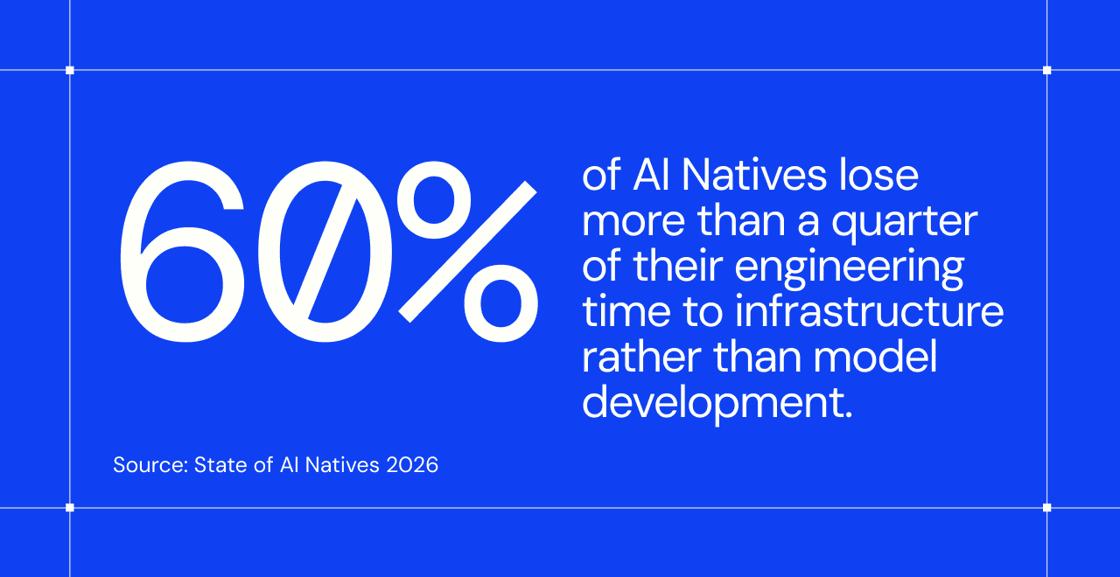
Meeting that demand takes more than GPUs. AI Natives also need a faster path to reliable production endpoints. The same research found that more than a third (34%) of AI-native leaders say it takes four days or more to move a trained model into a live endpoint, and 60% spend more than a quarter of their engineering time on infrastructure work. Cutting that overhead keeps more engineering time focused on the product.
That is where the operating model matters as much as the underlying GPU capacity. Nscale Dedicated Inference lets teams deploy supported models from the Nscale catalog as managed endpoints on reserved GPU capacity. Nscale handles deployment, monitoring, upgrades, and rollback paths across the serving layer, so teams can move from a supported model to a production endpoint without running that work themselves.
2. Open foundations give agents more to build on
Agentic systems are often built on open-source foundations. Teams build and train models with PyTorch and use Ray to run those workloads across many CPUs and GPUs. In production, vLLM and SGLang serve the models, while Kubernetes orchestrates the containers that run them.
Open tooling matters when stacks span multiple providers. In our State of AI Natives 2026 research, 96% of U.S. AI-native leaders use more than one provider or platform, and the average organization uses more than four distinct providers and tools across their stack.
Building on open foundations means improvements from a global community can reach the tools teams already use, while what they build on top stays portable as they scale. That is why Nscale invests in the ecosystems behind them. It has entered into an agreement to acquire Anyscale, the company founded by the creators of Ray, and recently joined the PyTorch Foundation as a Platinum member, with seats on its Governing Board and Technical Advisory Council.
Open models bring that same flexibility to the model layer. NVIDIA Nemotron 3.5 Super VL is an open multimodal model for agents that can understand documents, interfaces, and video, reason over what they see, and use tools. Because it is open, organizations can customize it with NVIDIA NeMo using their own data and keep greater control over model behavior, data handling, and agent workflows. On Nscale, teams can deploy NVIDIA Nemotron 3.5 Super VL through Dedicated Inference on reserved GPU capacity.
3. Agents that act need guardrails beneath them
An agent that can read a screen and call a tool can also access sensitive data and critical systems. As agents take on more responsibility, security controls need to extend beyond the model itself.
Nscale supports the NVIDIA Open Agent Safety Platform, which combines open software and a reference system design to help secure agentic AI from testing to deployment:
- NVIDIA OpenShell is an open-source runtime that sets a secure boundary for agents, traces their actions, and enforces policy.
- NVIDIA Sentry runs on NVIDIA BlueField-4 data processing units (DPUs), outside the agent’s execution environment. It continuously monitors agent behavior, verifies each agent’s identity and delegated authority, enforces granular zero-trust access policies for data, tools, and APIs, and, within milliseconds, can quarantine an agent that attempts to move outside its boundary.
At GTC Berlin, Tom Matthews, Principal AI Product Engineer at Nscale, demonstrated how Nemotron, NemoClaw, and OpenShell could work together to diagnose infrastructure challenges. The demo used Nscale Fleet Operations, which monitors compute, network, storage, and orchestration to have full visibility across Nscale’s GPU fleet.
4. Physical AI starts in simulation
The next step takes agents off the screen and into the physical world. These systems need to be able to accurately perceive, decide, and act in real time. That is why simulation matters before deployment.
Figure plans to build on that approach. Through a multi-year strategic partnership, Nscale will become Figure's preferred compute provider, powering the next generation of its Helix models and humanoid robots.
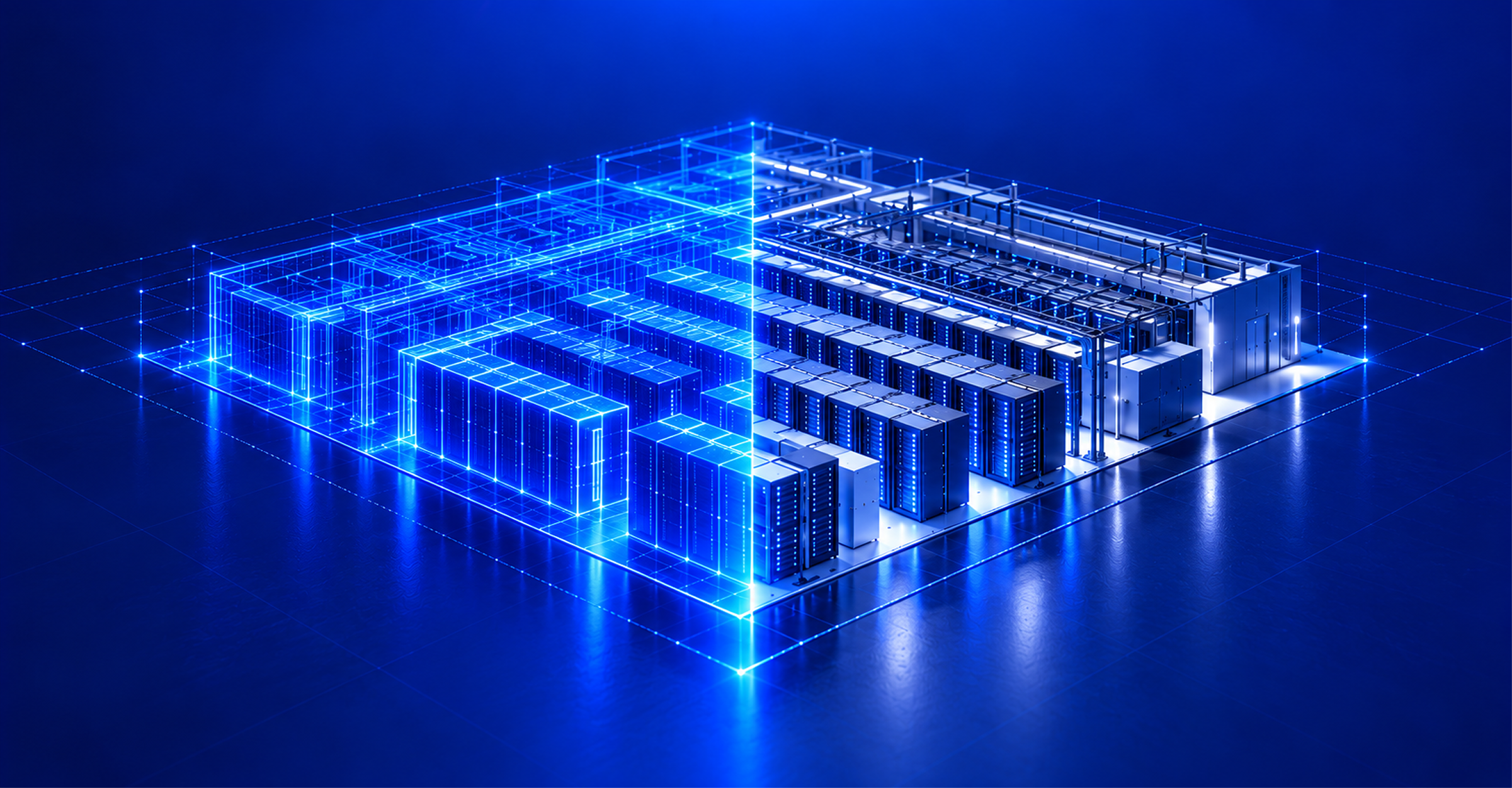
Nscale is exploring the same test-first approach for its own infrastructure. It plans to test NVIDIA Omniverse libraries and NVIDIA DSX Sim to understand how digital twins could inform the way it designs, deploys, and operates AI data centers.
Systems that act on physical environments benefit from simulation testing first, so infrastructure plans should allow for testing as well as training and inference.
Want to know more?
Nscale Chief Technology Officer, David Power, shares how our sites are modeled in simulation.
This article was originally published as part of Nscale's Full Stack AI newsletter, where we share perspectives on AI infrastructure, engineering, and emerging industry trends.
Subscribe to receive future editions.