AI-native companies build infrastructure differently. Here's how that approach improves the economics of serving AI.
The AI-native advantage is the ability to continuously optimize AI infrastructure as models and workloads evolve. Organizations that build infrastructure this way improve the economics of serving AI over time, creating a lasting advantage over disconnected environments.
What does ‘AI-native’ mean?
An AI-native company builds artificial intelligence into the core of its product, business model, and operations from the outset. AI shapes how the organization creates value, makes decisions, and serves customers.
That extends to infrastructure. Instead of bolting together compute, networking, storage, and orchestration after the fact, AI-native organizations design them as a unified system built for AI workloads, maximizing performance, utilization, and efficiency.
Why does being AI-native matter?
AI-native companies were built around the demands of production AI at scale, rather than adapting infrastructure designed for traditional enterprise workloads.
As AI adoption matures, inference is becoming the dominant AI workload. Unlike training, inference requires infrastructure that delivers low latency, high throughput, and continuous availability while operating efficiently over time.
Many enterprises are struggling to make that transition. Sixty-four percent of organizations cite integration complexity as a major barrier to scaling AI. Infrastructure fragmented across multiple cloud providers, regions, and technology stacks creates operational friction, making AI more difficult and expensive to operate at scale.
AI-native companies are often better positioned to navigate these challenges because their infrastructure is built for continuous adaptation.
How AI-native infrastructure works
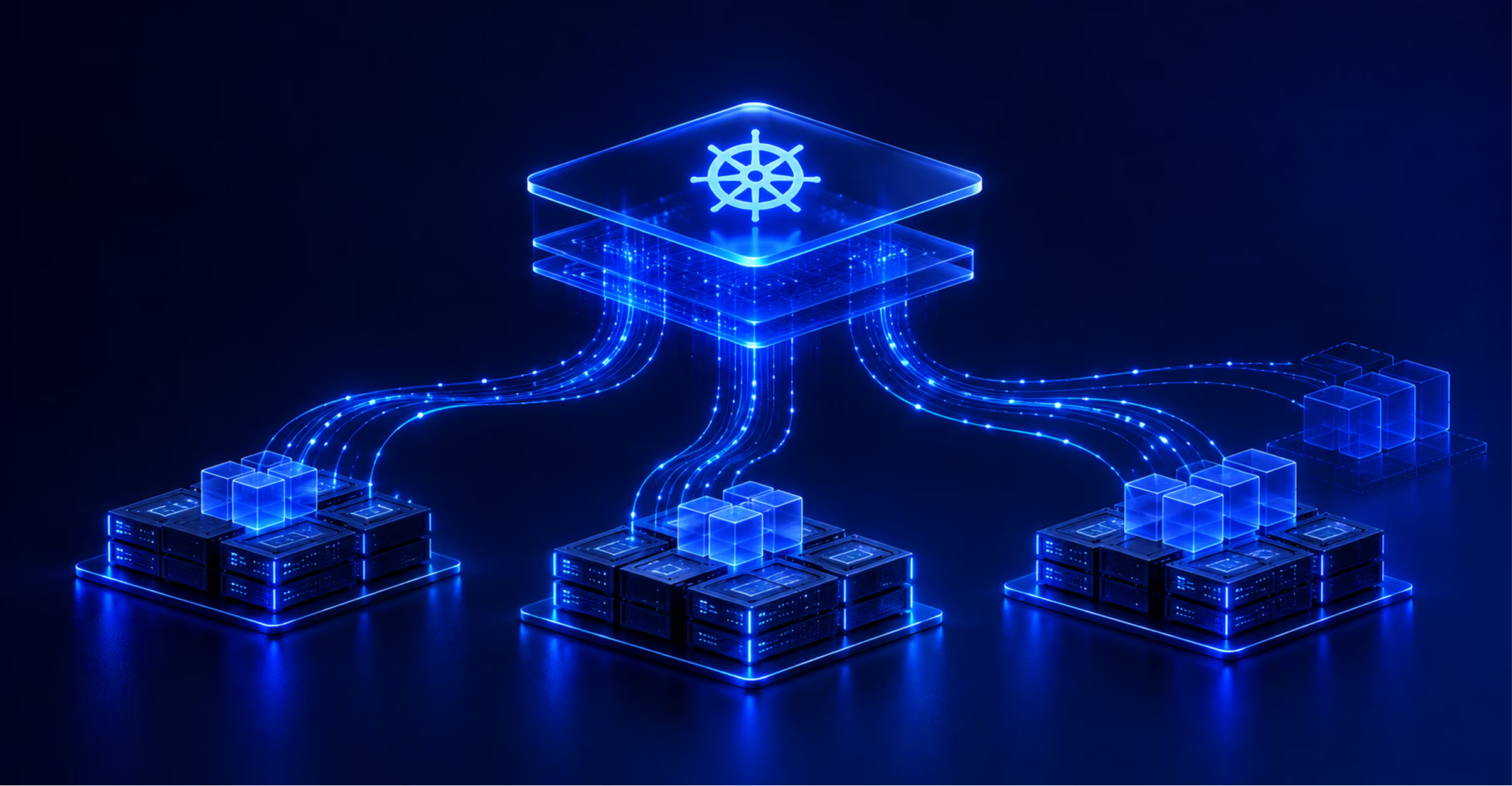
AI-native organizations standardize the layers that benefit from consistency, such as networking, scheduling, and observability, while keeping models, serving frameworks, and hardware flexible. This allows them to adopt new models, hardware, and software without re-architecting their infrastructure.
.png)
By optimizing the full stack, from infrastructure and orchestration to operations, they reduce bottlenecks, increase GPU utilization, improve latency, and deploy new models more quickly. Over time, those operational improvements translate into lower inference costs and stronger AI economics.
What can traditional organizations learn from AI Natives?
AI-native companies are the first to encounter, and solve, the challenges of scaling AI in production. As they push AI infrastructure further and faster than most organizations, they're revealing the operational, economic, and infrastructure constraints that will increasingly affect the wider market.
Three lessons stand out:
- Treat infrastructure as a competitive system, not a support function.
- Don't let experimentation infrastructure become production infrastructure by default.
- Optimize for utilization, not just capacity.
Conclusion: Winning with the AI-native advantage
Organizations that treat AI infrastructure as a coordinated, evolving system will be better positioned to keep pace with AI as it changes. Over time, that ability to continuously adapt becomes a lasting advantage.
That's the AI-native advantage.
.avif)