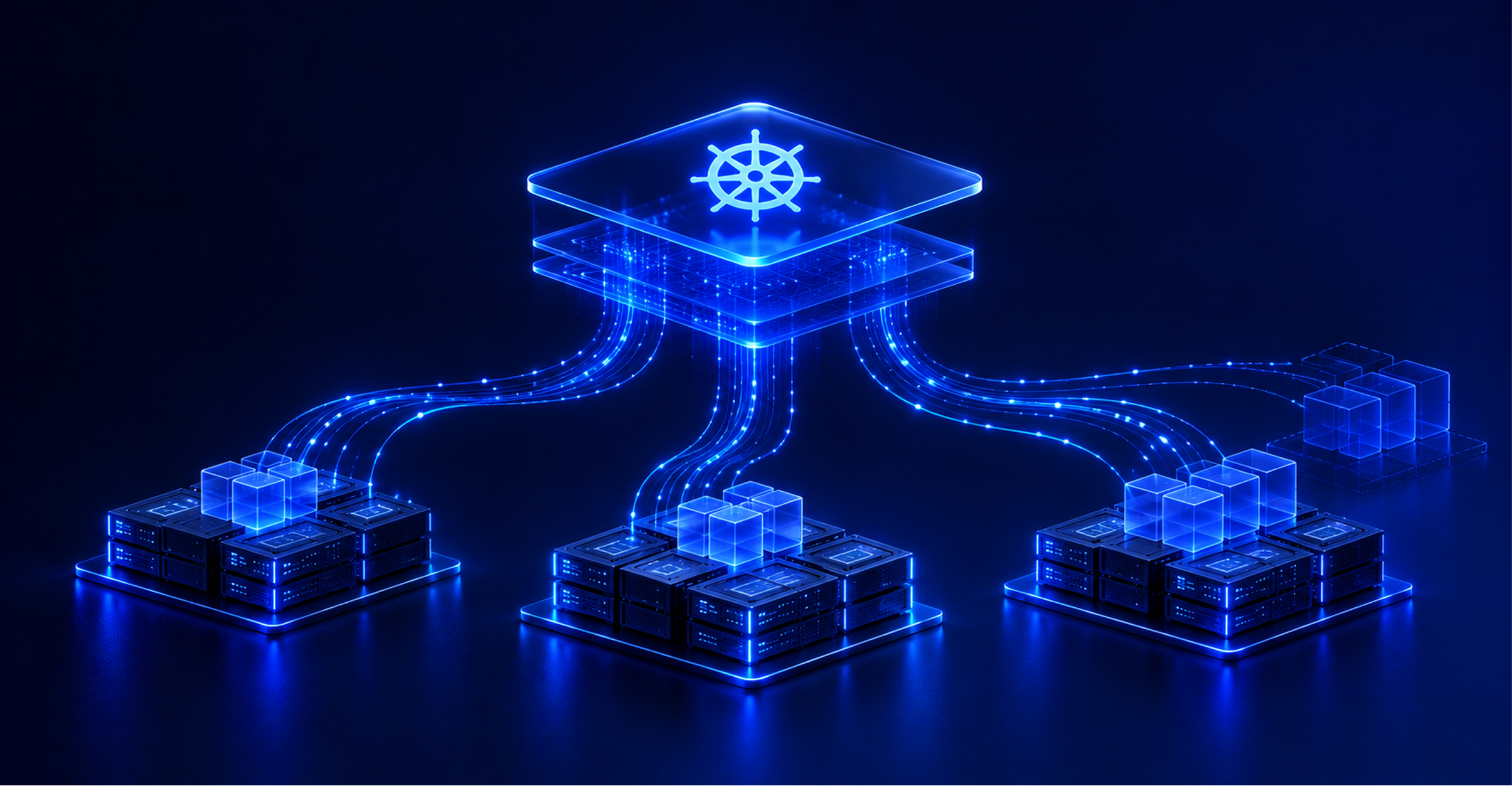
NKS gives AI teams managed Kubernetes on Nscale GPU infrastructure, keeping APIs, manifests, and RBAC they already use while Nscale handles the control plane, cluster lifecycle, and infrastructure beneath it.
Kubernetes gives teams a standard way to deploy and operate containerized applications. For AI teams, its rich ecosystem supports everything from training and inference to data-processing and internal platforms across shared GPU infrastructure.
But Kubernetes is not maintenance-free. As AI workloads grow, so does the operational burden of managing clusters and infrastructure beneath them. That work matters, but it is rarely where an AI-native companies create differentiated value.
That's why we built Nscale Kubernetes Service (NKS), a managed Kubernetes service that runs natively in Nscale Cloud. Nscale operates the control plane and cluster lifecycle, and manages the compute, networking, and storage beneath it. Your teams keep the Kubernetes workflows they already know, while spending less time managing the infrastructure behind them.
The operational burden behind every cluster
AI platform teams want three things from a Kubernetes service: familiar developer workflows, GPU capacity that can grow with demand, and less time spent on cluster administration. Today, they often have to trade one for another:
- Run Kubernetes yourself and keep your existing workflows, but retain full operational responsibility.
- Use a hyperscaler's managed service and offload operations, but risk being drawn into an ecosystem where identity, networking, and add-ons are tied to that provider's tools and workflows.
NKS is designed to remove that trade-off. Teams keep their Kubernetes workflows and control how their workflows run, while Nscale manages the control plane, cluster lifecycle and underlying infrastructure.
Keeping your workflows is key to Kubernetes
Developers don't work with Kubernetes in isolation. They rely on manifests, deployment patterns, Helm charts, RBAC, CI/CD pipelines, and operational tooling that become embedded in how their teams build and ship software. A managed service should reduce the work of operating Kubernetes without forcing developers to change how they build.
With NKS, teams spin up clusters fast while keeping the standard Kubernetes workload: the same APIs, manifests, RBAC, and cloud-native tooling they already use, where workloads can be migrated.
Access follows the same principle. Nscale identity is mapped to standard Kubernetes users and project-scoped groups, while Kubernetes RBAC determines what each identity can do within the cluster. Teams can continue managing access through familiar controls.
Keeping that standard Kubernetes layer also preserves flexibility. AI-native companies need to move quickly. Requirements change, capacity needs shift, or teams expand to new geographies and security requirements. When workloads are built against standard Kubernetes interfaces, teams keep their deployment patterns consistent while making infrastructure decisions on their own terms.
Scale GPU capacity without rebuilding your cluster
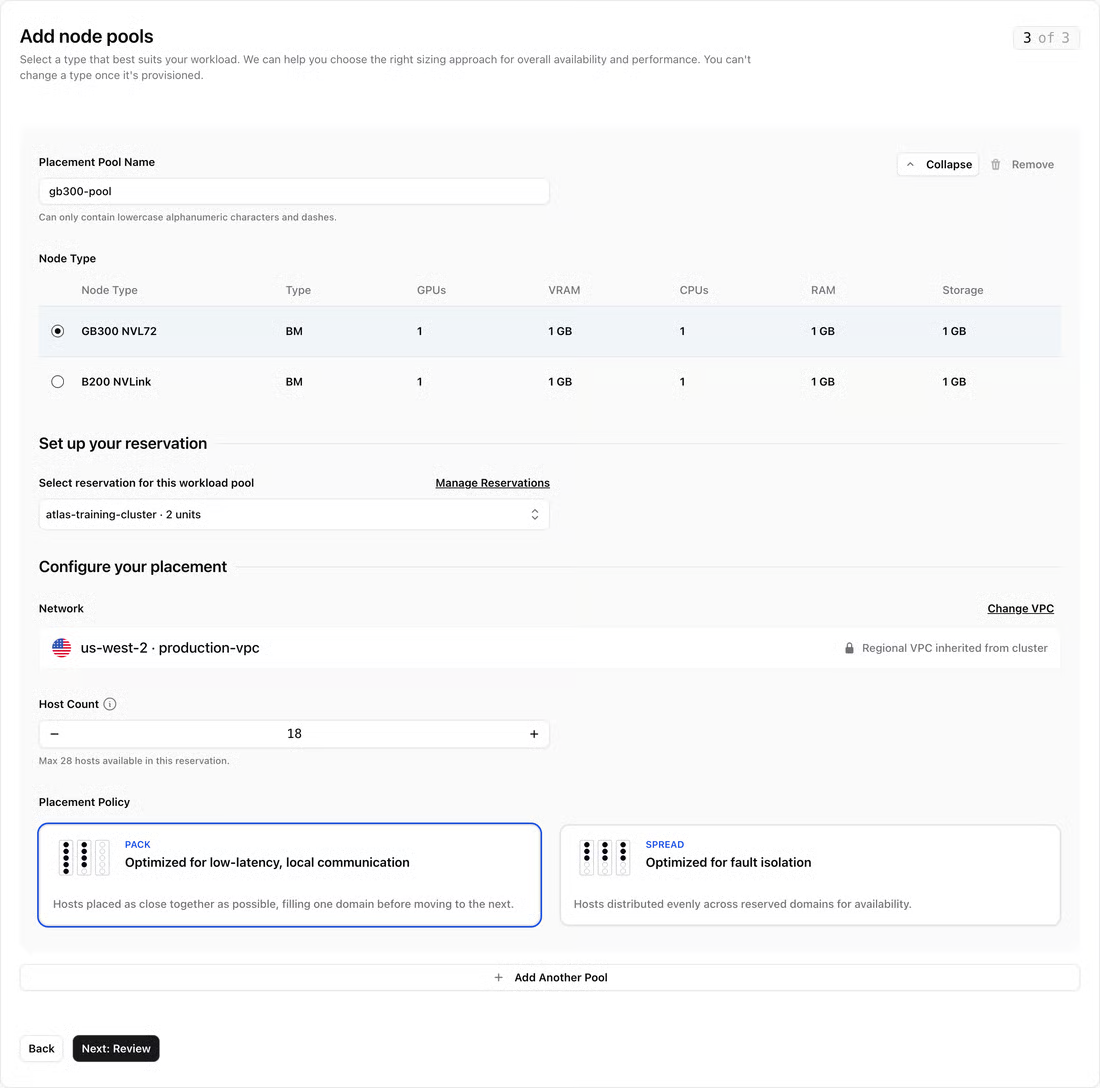
AI workloads place different demands on infrastructure. GPU capacity needs to be reserved and placed with network topology in mind, while storage and networking need to keep pace with training and inference traffic. As demand grows, teams also need capacity without disrupting the workloads already running.
NKS brings these requirements together in one managed service. It connects Kubernetes to GPU worker pools on Nscale's enterprise-grade superclusters, with topology-aware reservation and placement, networking, industry-standard storage protocols, and load balancing. Workloads can access the latest GPUs and high-bandwidth interconnects.
Scaling capacity doesn't require rebuilding the cluster. Node pools have their own lifecycle, so teams can add and scale worker capacity through NKS while keeping the control plane and existing workloads in place.
Spend less time operating Kubernetes
Running Kubernetes means more than deploying workloads. Platform teams also need to maintain the control plane, monitor cluster health and availability, manage recovery, and provision the worker capacity those workloads depend on. For teams building AI products, that operational work can take engineering time away from models, applications and customers.
With NKS, Nscale operates the control plane and cluster lifecycle, including provisioning, scheduling, and health monitoring. Because Nscale owns every layer of the stack beneath the cluster, we also handle control-plane availability. Platform teams spend time supporting AI workloads, not administering Kubernetes, which improves costs and reduces the need for a dedicated platform team to manage the infrastructure.
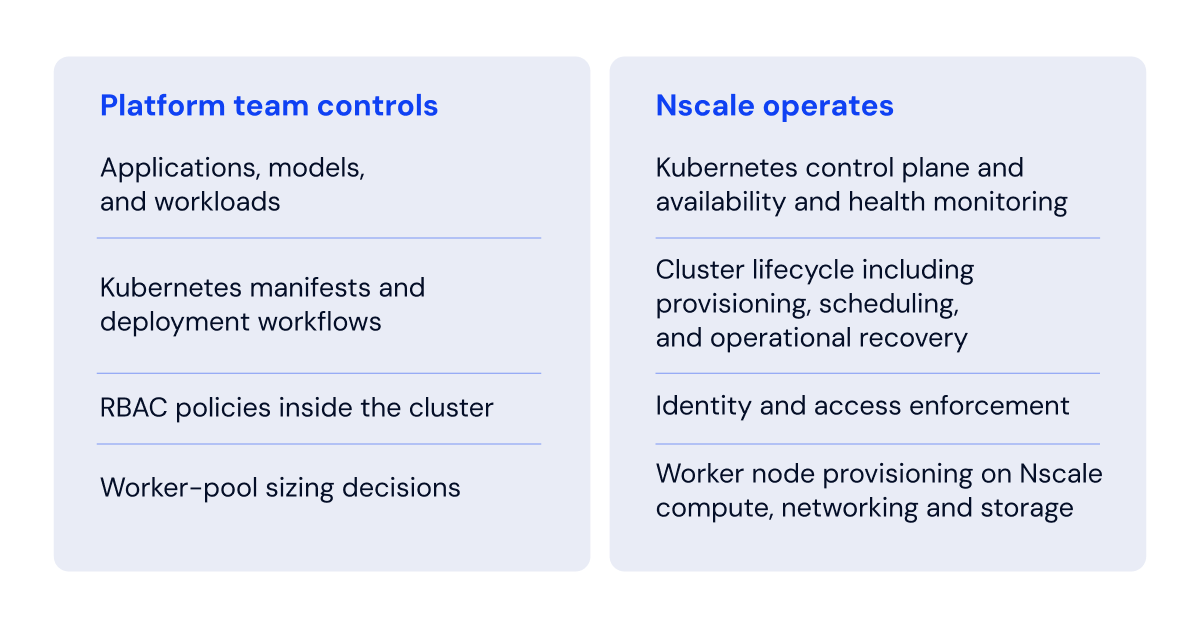
Your team stays in control of applications, workloads, and RBAC. Nscale takes on the undifferentiated work beneath them.
Build for AI teams and enterprises
AI Natives can run training, inference, and supporting services on managed Kubernetes while keeping the APIs, manifests, RBAC, and tooling they already use. Platform teams no longer have to operate and maintain every cluster control plane themselves.
Enterprises can meet requirements around governance, identity, isolation, network access, and consistency across teams. Nscale identity maps to Kubernetes RBAC, with dedicated Kubernetes API servers, without locking teams into a closed ecosystem.
Developers can build and run workloads with standard Kubernetes tools and familiar deployment patterns. With Nscale managing the control plane and cluster lifecycle, they spend less time on platform administration and have a simpler path from development to production.
Keep your workflows. Offload the platform operations.
NKS gives AI teams the Kubernetes workflows they already know, backed by Nscale GPU infrastructure, without the operational burden of managing the control plane and cluster lifecycle themselves.
That leaves engineering time where it creates the most value: building and improving AI products.
Ready to run production AI workloads on NKS? Talk to Nscale about managed Kubernetes and GPU capacity for training and inference.

.png)